Agios Prokopios
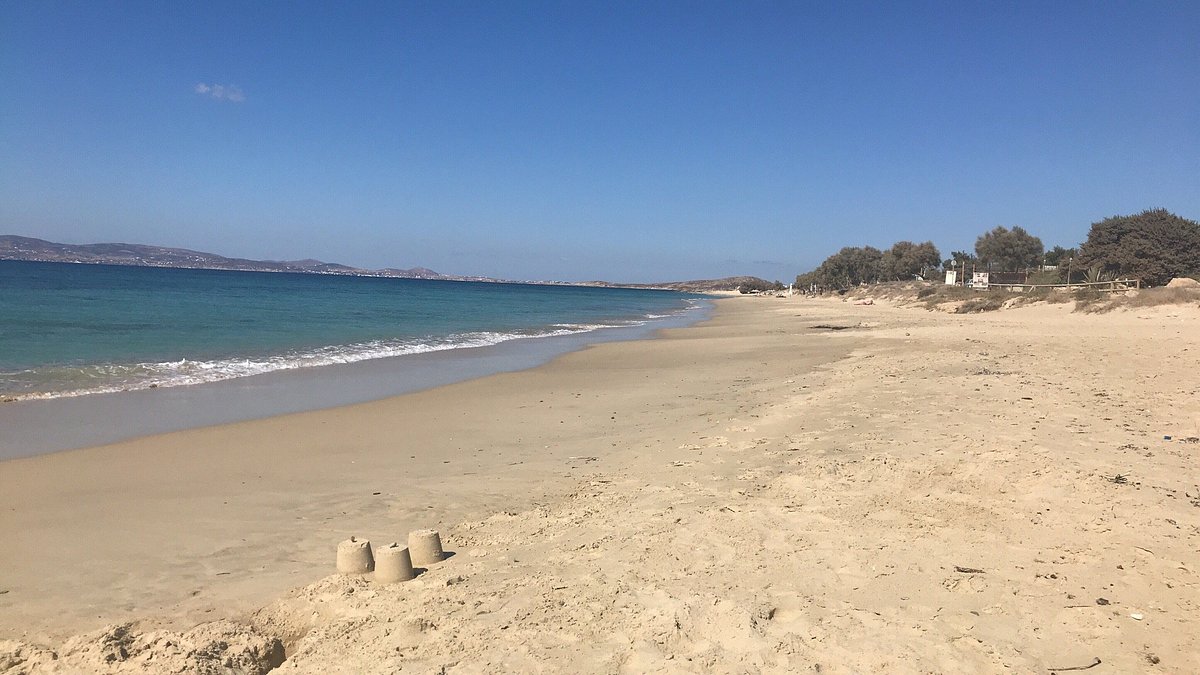
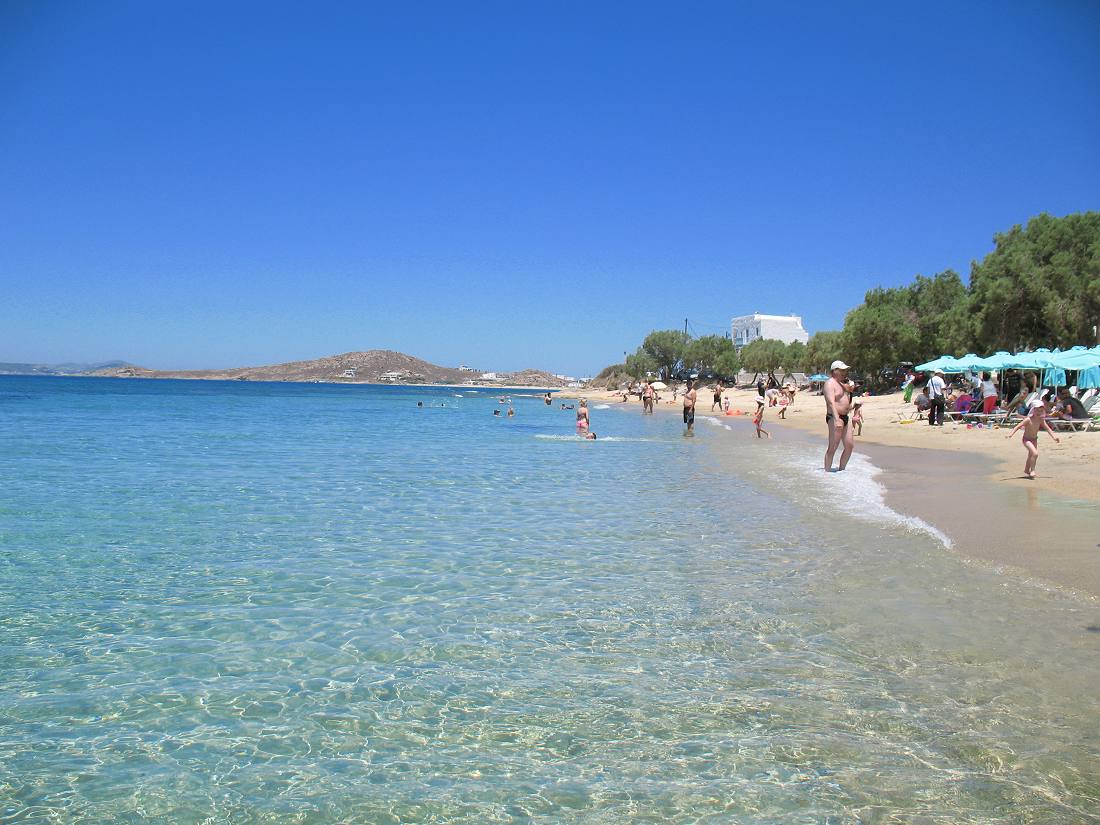
Known for: the safest swimming on the island. A broad crescent of pale sand where the water stays waist-deep far out, backed by a full village of tavernas, rooms and shops. Busy in August, but big enough to absorb it.
Fifteen beaches along 93 kilometres of coast — from organised family sand ten minutes from town to cedar dunes at the end of a dirt track. Here is which one to drive to, and when.
Almost everything you have seen in photographs of Naxos sits on the west and south-west coast, in a near-continuous strip that begins at the edge of Chora and runs south for about 20 kilometres. Agios Georgios, Agios Prokopios, Agia Anna, Plaka, Mikri Vigla, Kastraki, Alyko and Pyrgaki follow one another down a single road, each one progressively quieter than the last.
Because they all face west, they share two things: reliably calm morning water, and full exposure to the afternoon meltemi wind that blows through July and August. It is also why every one of them gets the sunset.
The east coast is a different island entirely. Moutsouna, Psili Ammos and Panermos are reached by crossing the mountains, and they reward the drive with near-empty sand. The north around Apollonas is rockier, wilder and best combined with a full day on the road.
Distance is the honest catch. Chora to Alyko is 40 minutes; Chora to Moutsouna is close to an hour of mountain switchbacks. Buses reach the first four beaches on this list and effectively none of the others.
Naxos does not have one best beach. It has four very different kinds, and picking the right category matters more than picking the right name.
Shallow entry, soft sand, facilities and food within a few steps. Agios Prokopios, Agia Anna, Agios Georgios, Pyrgaki.
02Reliable summer meltemi, schools and rental centres on the sand. Mikri Vigla north bay, Laguna, Plaka's southern end.
03No sunbeds, no signposts, sometimes no asphalt. Alyko's coves, Panermos, Psili Ammos, Hawaii Beach.
04Loungers, cocktails, music until sundown. Plaka, Agia Anna, Agios Prokopios, Mikri Vigla south.
If you only have a few beach days, take them here. Distances are measured from Chora by road.
Known for: the safest swimming on the island. A broad crescent of pale sand where the water stays waist-deep far out, backed by a full village of tavernas, rooms and shops. Busy in August, but big enough to absorb it.
Known for: length. Four kilometres of dune-backed sand where you can always find space, even in high season. The northern end is organised with beach bars; walk south and it turns quiet, then clothing-optional, then empty.
Known for: convenience. A compact, sheltered beach beside a working fishing harbour, with the island's densest concentration of seafront tavernas. Walkable from Agios Prokopios along the sand.
Known for: wind. A granite headland splits two bays — the north side is a world-class kitesurf and windsurf break, the south side (Sahara) is flat, warm and calm. One stop, two completely different beaches.
Known for: space. A long, pale arc on the south-west coast with almost nothing built behind it. Bring water, shade and lunch — there are only a couple of small canteens along its whole length.
Known for: atmosphere. A protected cedar forest on dunes, hiding a chain of small sandy coves and the abandoned, mural-covered hotel that everyone photographs. The most distinctive place on the Naxos coast.
From roughly late June to early September the meltemi blows down the Aegean from the north. On most islands that is an inconvenience. On the west coast of Naxos it is the main attraction.
Side-onshore wind, a huge shallow launch area and reliable 5–7 Beaufort afternoons. Schools operate on the sand from May to September and rent full kit by the day.
The shallow lagoon south of Mikri Vigla is waist-deep for a hundred metres, which makes it one of the best beginner windsurf classrooms in Greece. Falling off has no consequences here.
Head for structure, not sand: the rocks around the Mikri Vigla headland, the coves at Alyko, and the reefs off Pyrgaki. Mornings are best, before the wind puts sand in the water.
Conditions change bay by bay and hour by hour. A vehicle lets you follow the forecast instead of hoping it finds you.
Every distance below is by road from the port in Naxos Town. “Bus” means a scheduled public bus service runs there in summer — not that it runs often.
| Beach | Distance | By car | Bus? | Parking |
|---|---|---|---|---|
| Agios Georgios | 0.5 km | Walk from town | Walkable | Street parking in Chora |
| Agios Prokopios | 5.5 km | 10 min | Yes, frequent | Large free lot |
| Agia Anna | 6.5 km | 12 min | Yes, frequent | Free, fills early |
| Plaka | 8 km | 15 min | Yes | Free, roadside & lots |
| Mikri Vigla | 17 km | 25 min | Limited | Free, unpaved |
| Kastraki | 20 km | 30 min | Limited | Free, roadside |
| Alyko | 23 km | 35 min | No | Free, dirt track |
| Pyrgaki | 25 km | 35 min | Limited | Free, shaded |
| Moutsouna | 42 km | 55 min | No | Free, harbour front |
| Panermos | 48 km | 70 min + track | No | None — park and walk |
Six of the ten beaches above have no realistic public transport. Compare Naxos car and scooter rentals and reach all of them at your own pace.
Agios Prokopios is the strongest all-round family choice: soft sand, water that stays shallow a long way out, sunbeds, showers, lifeguard presence in peak season and tavernas directly behind the beach. Agia Anna next door is smaller and even more sheltered, which suits toddlers, while Agios Georgios in Chora is the most convenient if you are staying in town without a vehicle.
The southern bay at Mikri Vigla (Sahara) is well suited to beginners: flatter water, gentler wind and schools that run lessons through the summer. The northern bay is the advanced side, where the meltemi funnels around the headland and produces the strong, consistent conditions that make Naxos a serious kitesurfing destination. Always take a lesson before rigging on the north side.
Yes. Every beach in Greece is public and free to access, including the stretches in front of hotels. What you pay for is equipment: a sunbed-and-umbrella set typically costs between 10 and 25 euros a day depending on the beach and season, and is often waived or discounted if you order food and drinks from the operating beach bar. Bring a towel and you can use any beach for nothing.
Alyko and Kastraki both face west across open sea with nothing in the way, and the cedar dunes at Alyko make the light spectacular. For the classic postcard, the Portara above Agios Georgios in Chora frames the sun as it drops. Plaka is the best compromise: a proper sunset view with a beach bar still serving behind you.
Natural shade is rare. Alyko and Pyrgaki have cedar and tamarisk trees close to the sand, and parts of Plaka have tamarisks near the back of the beach. Everywhere else you either rent an umbrella from a beach bar or bring your own — essential on Kastraki, Mikri Vigla and the wilder eastern coves, where there is no cover at all.
Alyko, Kastraki, Panermos and Psili Ammos are effectively car-only. Compare cars, scooters, quads and buggies from 13+ local Naxos rental companies, with real-time prices.
Compare Naxos rental companies